
US ‘Mother of All Bombs’: Could It Strike Iran’s Nuclear Sites?
- World Defense Iran Israel War Latest
Infosprinkle
- 0
- 14 minutes read
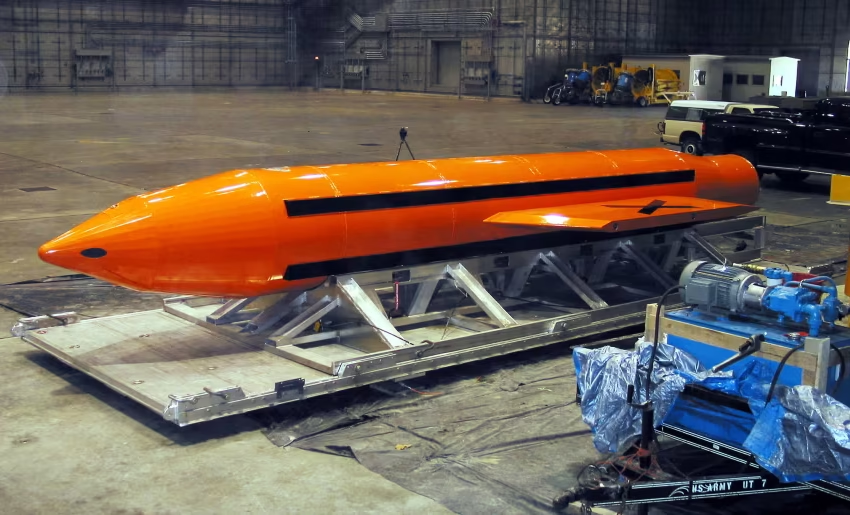
Image Source :CNN
The United States’ Mother of All Bombs (MOAB) has drawn attention amid reports of potential military options involving Iran. The powerful conventional weapon is designed to produce a massive blast, but questions remain about its effectiveness against deeply buried nuclear facilities and the consequences of any potential strike.
The MOAB is not a nuclear weapon. Its capabilities, however, should not be confused with those of specialized bunker-busting bombs designed to penetrate heavily fortified underground targets. Reports that military options are being considered do not, by themselves, confirm that the weapon has been authorized for use against Iran.
What Is the US Mother of All Bombs?
The GBU-43/B Massive Ordnance Air Blast bomb, commonly known as the Mother of All Bombs, is one of the largest conventional bombs developed by the United States.
It was designed to create an extremely powerful blast over a wide area. Unlike nuclear weapons, the MOAB relies on conventional explosives rather than a nuclear reaction.
Its large explosive payload makes it capable of causing extensive damage in the area affected by the blast. However, its size and explosive power do not automatically make it suitable for every military target.
Key facts about the MOAB
- Official designation: GBU-43/B Massive Ordnance Air Blast.
- Weapon type: Large conventional explosive bomb.
- Total weight: Approximately 9,800 kilograms.
- Explosive payload: Approximately 8,500 kilograms.
- Combat history: First used by the United States in Afghanistan in 2017.
- Primary effect: A massive blast capable of causing significant destruction over a wide area.
These figures are approximate and refer to commonly reported specifications.
Could the MOAB Be Used Against Iran?
Reports of possible US military options involving Iran have raised questions about whether the MOAB could be part of a future operation.
However, the weapon's potential use would depend on several factors, including the target, the intended military objective, operational requirements and the risk of collateral damage.
A large conventional bomb may be considered for targets where a powerful surface-level blast is the primary objective. Deeply buried nuclear facilities present a different challenge.
The key question is not simply how powerful the bomb is, but whether it can reach and damage the specific target.
Can the MOAB Destroy Iran’s Underground Nuclear Facilities?
Iran's nuclear infrastructure includes facilities that may be protected by reinforced structures, rock and substantial underground construction. The effectiveness of any weapon against such targets depends on their depth, design and protective features.
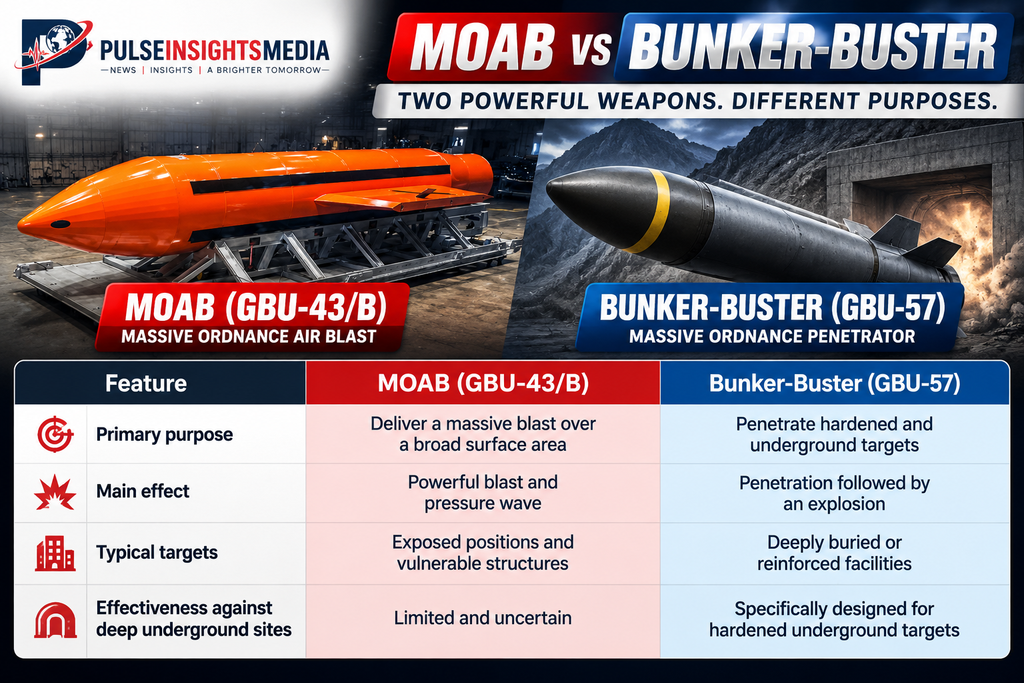
The MOAB is primarily designed to deliver a massive blast. It is not the same as a specialised penetrator weapon built to strike hardened underground structures.
As a result, its ability to destroy deeply buried facilities cannot be assumed from its explosive yield alone.
MOAB vs GBU-57 bunker buster
The United States also possesses the GBU-57 Massive Ordnance Penetrator, a specialised weapon designed to attack hardened and deeply buried targets.
The two weapons serve different purposes. Their effectiveness depends on the target and the circumstances of a potential operation.d
What Could Be the Consequences of a Strike?
Any military strike involving powerful conventional weapons could carry consequences beyond the immediate target.
1. Risk of regional escalation
An attack on Iranian territory could trigger retaliation or lead to further military action. The scale and nature of any response would depend on the circumstances.
2. Damage to infrastructure
A weapon with a large blast effect can cause serious destruction near the impact area. The extent of the damage would depend on the location and surrounding infrastructure.
3. Wider security implications
An escalation could affect regional stability, diplomatic relations and international security.
4. Uncertainty over military objectives
Destroying a facility, delaying an activity and eliminating an entire capability are different objectives. The outcome of a strike would depend on the target, weapon effectiveness and other operational factors.
Has the US Confirmed a MOAB Attack on Iran?
Reports discussing a possible military option should not be interpreted as confirmation that an attack has been approved or carried out.
A reliable assessment requires distinguishing between reported planning, official authorisation and an actual military operation.
Without a verified official announcement or reliable reporting confirming its use, it would be inaccurate to state that the United States has deployed the MOAB against Iran.
Readers should look for confirmation from official statements and multiple credible news organisations before treating such claims as established facts.
Frequently Asked Questions
1. What does MOAB stand for?
MOAB stands for Massive Ordnance Air Blast. It is the common name for the US GBU-43/B conventional bomb.
2. Is the Mother of All Bombs a nuclear weapon?
No. The MOAB uses conventional explosives and does not produce a nuclear explosion.
3. Can the MOAB destroy deeply buried nuclear facilities?
Its effectiveness against deeply buried facilities cannot be assumed. The weapon is designed primarily for a massive blast, while underground targets may require specialised penetrator weapons.
4. What is the difference between the MOAB and the GBU-57?
The MOAB is designed to deliver a powerful blast over a wide area. The GBU-57 is designed to penetrate hardened underground targets before detonating.
5. Has the US confirmed using the MOAB against Iran?
Reports about possible military options do not confirm that the weapon has been authorised or used against Iran. Any claim of an actual attack requires reliable verification.
The Bottom Line
The US Mother of All Bombs is an exceptionally large conventional weapon, but its destructive power does not mean it can automatically destroy deeply buried nuclear facilities. The distinction between a massive-blast bomb and a specialised bunker buster is central to understanding its potential military role.
For now, reports about possible use against Iran should be treated carefully. A potential military option is not the same as a confirmed decision or an actual attack.

